Every Company Will Become a Systems Company

Talent still wins—but only when it’s wired to flow.
There’s a reason some of the smartest people feel stuck.
It’s not the workload.
It’s not the mission.
It’s the system they’re trapped inside.
Because in 2025, talent alone isn’t the edge.
Systems are.
And not systems in the IT sense but in the deeper sense:
the invisible architecture of how your people think, decide, act, adapt, and scale.
That’s where the next competitive advantage lives.
Because the truth is this:
Genius in a broken system fails.
Mediocrity in a great system survives.
But talent inside a high-functioning system?
That’s how you bend the curve.
Every company is about to become a systems company.
Not because it’s trendy.
But because it’s the only way through the noise.
What’s a Systems Company?
A systems company doesn’t sell systems.
It thinks in them.
It sees every process, every role, every tool as part of a living structure.
And in that structure:
- Work flows through clarity—not status
- Feedback loops aren’t occasional—they’re continuous
- Tools don’t compete with people—they route their power
- Ownership isn’t static—it follows the signal
You don’t notice the system at first.
What you notice is:
“Why does this place run so well?”
It’s not magic.
It’s architecture.
What’s Failing in Most Companies?
Not the people.
Not even the strategy.
What’s failing is the space between decisions.
- Approvals bottlenecked
- Signals missed
- Handoffs fumbled
- Feedback delayed
- AI output trusted, but not verified
- Everyone “owns it,” but no one makes the call
That’s not a process failure.
That’s a systems failure.
And it’s becoming the most expensive one in your company.
Why It Matters Now
Because the future doesn’t slow down for your legacy ops.
It multiplies:
- More tools
- More data
- More agents
- More dependencies
- More “almost-right” answers
- Less time to second-guess any of it
If your system can’t:
- Detect drift
- Reallocate ownership
- Integrate machine input
- Surface breakdowns before they hit the customer...
Then your best people become overextended.
Your smartest thinking gets stuck.
And AI doesn’t help—it hides the rot.
You don’t lose because your people weren’t good.
You lose because the system didn’t let them win.
What a Systems Company Builds Differently
This isn’t about using Notion better.
It’s about rewiring the loop between thinking and action.
They:
- Design work as flow, not function
- Treat automation as signal infrastructure, not just time-saving
- Elevate context, not just visibility
- Align incentives with how the system behaves under pressure
- Make adaptability a feature—not an emergency response
- Train people how to think in systems, not just how to use tools
This isn’t future fantasy.
This is already how your best competitors operate.
One Last Thought
Talent still matters. More than ever.
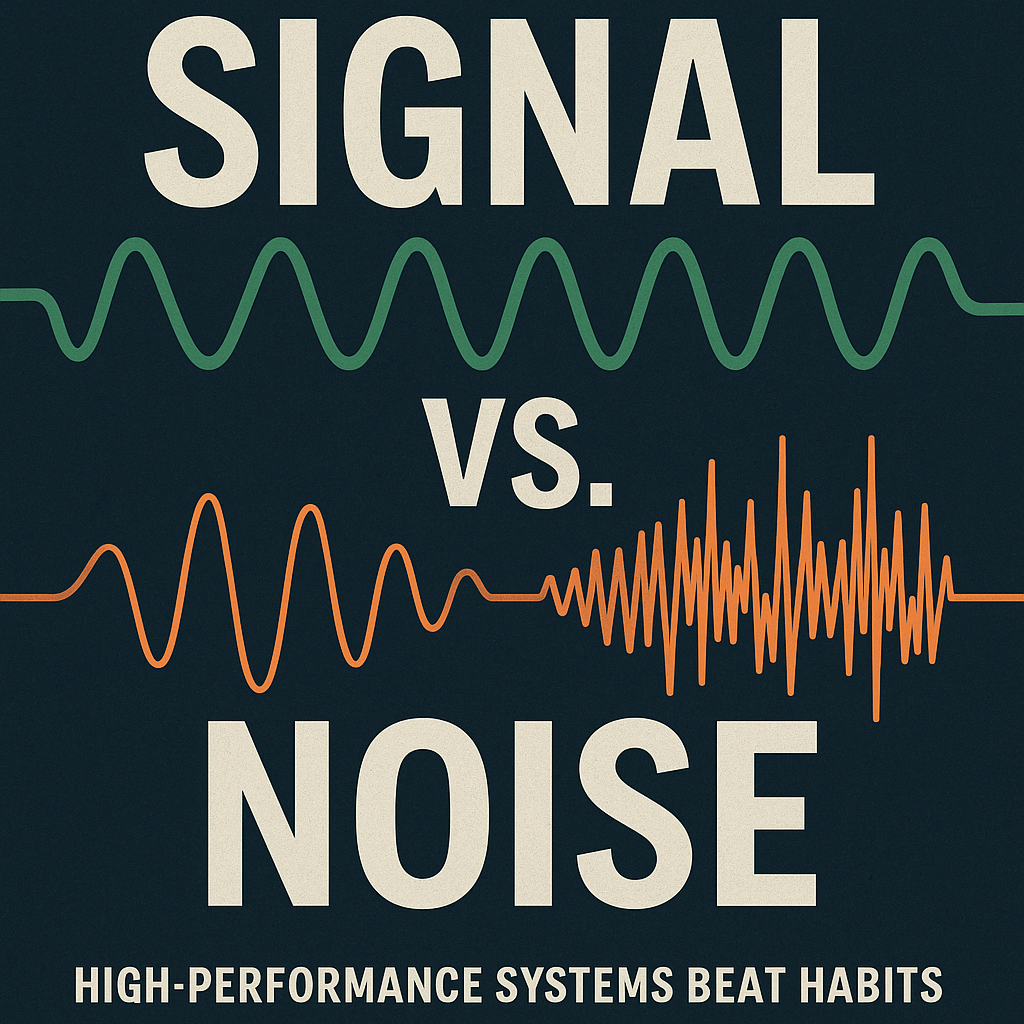
But talent unleveraged by structure is like signal with no channel:
It gets lost in the noise.
You don’t need more meetings.
You need fewer points of friction.
You don’t need more collaboration.
You need cleaner movement through the work.
You don’t need more AI.
You need a system that knows what to trust and when to challenge it.
Because the companies that survive what’s coming aren’t just smart.
They’re structured to stay smart at scale.
So yes, every company will become a systems company.
Not to replace people but to finally unblock them.
That’s what’s under construction now.
More soon,
Gage Batten
Under Construction
How work is being rebuilt in real time