We’re Looking for the Next Interface

You can feel it.
Typing feels like drag.
Forms feel like friction.
Apps feel like containers for problems that move faster than the tabs can load.
And the deeper the systems get—AI agents, data pipelines, digital twins—the more absurd it starts to feel that we still navigate everything with a keyboard and dropdowns.
We’re not fatigued by the tools.
We’re fatigued by the way we’re still expected to talk to them.
What’s Trending: Natural Language + System Awareness
It’s not just voice.
It’s voice-native.
It’s goal-native.
We’re watching the stack start to shift toward interfaces that:
- Interpret intent
- Hold context over time
- Learn preferences
- Pull from live system states
- Route work, not just return results
This is happening across:
- ChatGPT plugins + Memory
- Claude’s multi-turn reasoning
- Devin’s agent orchestration
- MetaGPT, AutoGen, Crew AI, and others rethinking task-based collaboration
But what’s missing?
The interface that makes this real.
The one that understands work, not just answers.
Where This Could Actually Be Useful
This isn’t just an upgrade for consumer UX.
This matters most where:
- The work is situational
- The decisions are multi-variable
- The cost of delay or friction is measured in hours, dollars, or safety
That includes:
- Construction: “Show me every unresolved item affecting exterior punch by floor, by trade, by age.”
- Manufacturing: “Rebalance this line based on machine efficiency and absenteeism.”
- Logistics: “Which incoming shipment will create capacity strain three days from now?”
- Field Service: “Give me a timeline with task blockers grouped by part availability.”
- Facilities: “What maintenance tasks are repeating by building with incomplete work orders?”
Today, we dig through dashboards.
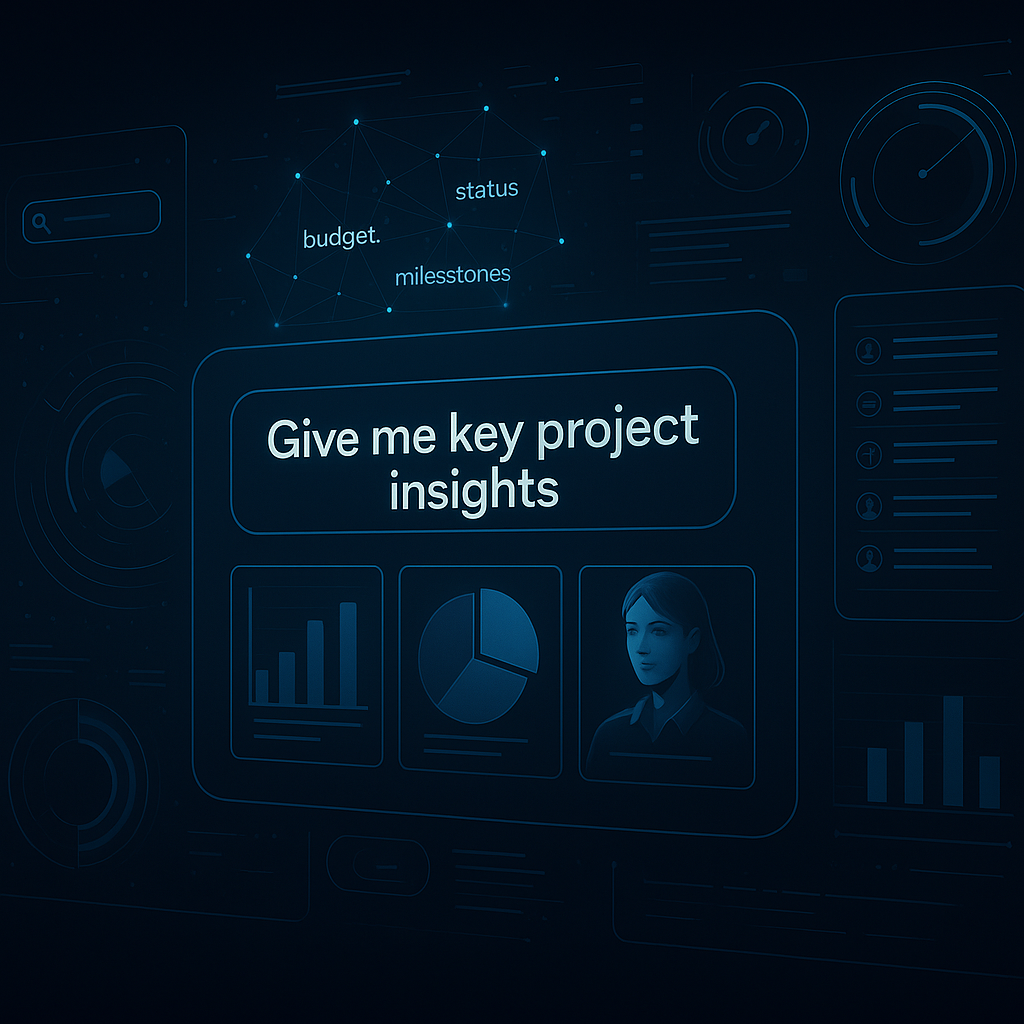
Tomorrow, we’ll speak the goal—and the system will assemble a plan in real time, update it with new context, and let us approve, adjust, or escalate.
This is what the next UI has to become:
- Conversational
- Compositional
- Operational
- Adaptive
- Auditable
Not “voice-to-form.”
Voice-to-work.
What to Plan For Now
Forward-thinking companies aren’t waiting for the new interface to be handed to them.
They’re already preparing for a future that looks like:
- Goals as input
- Systems as collaborators
- Agents as teammates
- Interfaces as performance layers, not control panels
What that means tactically:
- Structure your data to be callable
- Expose system logic so it can be visualized
- Build permissioning not around access—but around delegation
- Rethink roles: who makes decisions, and who routes them?
- Train your teams to think in flows, not tools
The companies that get this right won’t just move faster.
They’ll stop being gated by UI entirely.
They’ll move from workflow → flow.
From inputs → goals.
From dashboards → real-time options.
One Last Thought
Interfaces are power.
They define what’s possible.
They dictate how fast we move.
They encode how we think about problems.
And when the interface is outdated, the organization starts to feel slow—no matter how advanced the tools underneath.
So when people say “AI will change everything,” they’re missing something.
AI can’t change everything…
Until we change the way we interact with it.
We don’t need more tools.
We need new surfaces.
Surfaces that understand who we are, what we’re trying to do, and how to help—without asking us to click “submit.”
That’s the real frontier.
And that’s what’s under construction now.
More soon,
Gage Batten
Under Construction
How work is being rebuilt in real time